The ongoing 2025 Global South Media and Think Tank Forum in China's Kunming underscores a critical and undeniable truth: for the Global South to achieve genuine sovereignty and equity on the world stage, it must first fortify its own intellectual infrastructure, noted a Sri Lankan expert.
by Maya Majueran
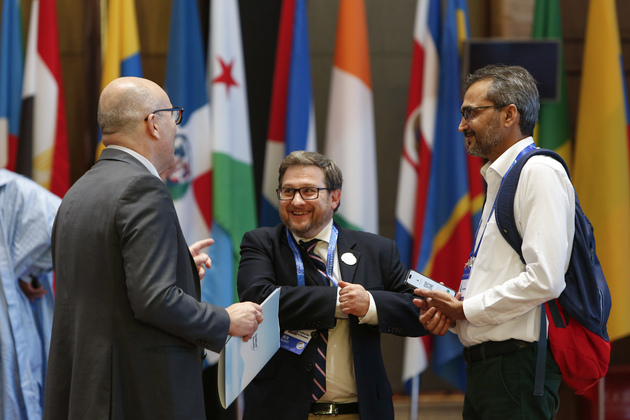
The 2025 Global South Media and Think Tank Forum in Kunming, China, running on Sept. 5-9, is far more than a simple gathering; it is a powerful statement of intent. As about 500 journalists, scholars, government officials and entrepreneurs from more than 260 institutions across 110 countries and regions converge with a shared mission, the event's theme of "Empowering Global South, Navigating Global Changes" moves from a slogan to a tangible agenda.
This forum underscores a critical and undeniable truth: for the Global South to achieve genuine sovereignty and equity on the world stage, it must first fortify its own intellectual infrastructure. The path to self-determination is paved with independent thought, and think tanks are the essential architects of this new road.
For decades, the policies that have shaped the destinies of nations across Africa, Asia, and Latin America were often crafted in distant capitals like Washington and Brussels. These imported models, frequently designed with a limited understanding of local realities, cultures, and complex social dynamics, have a long history of misfiring. The repeated failures of one-size-fits-all solutions present a compelling case for a fundamental shift. The time has come for the Global South to finally chart its own course, and a robust network of independent think tanks is indispensable for this mission. This is not about isolationism but about informed self-interest.
Consider the stark imbalance of global governance. While the Global South accounts for over 70 percent of the world's population, its voice remains a whisper in the halls of powerful institutions like the International Monetary Fund and the World Bank, where structures continue to reflect a bygone era of Northern dominance. Without strong, local institutions to articulate and defend its interests, the South is perpetually relegated to the role of a passive recipient, reacting to policies designed elsewhere for others' benefits. The Kunming forum signals a decisive turning point away from this dynamic, demonstrating a collective will to speak with one's own voice.
The functions of these think tanks are multifaceted and extend far beyond academic research. Their primary role is to develop local knowledge for local problems. A policy that succeeds in Scandinavia may fail catastrophically in Sahelian Africa because it ignores specific cultural contexts, traditional governance structures, and environmental conditions. Whether the challenge is food security in Nigeria, urban infrastructure in Indonesia, or digital inclusion in Bolivia, homegrown think tanks are uniquely positioned to design context-specific strategies that are both effective and sustainable.
Furthermore, these institutions are vital to informing sound national policy. They serve as a crucial bridge between cutting-edge research, government action, and public awareness. By producing reliable data and rigorous, independent analysis, they strengthen governance and enhance democratic accountability. They also play a watchdog role, spotlighting critical issues that are often dismissed or overlooked in Northern policy circles, such as the devastating human impact of economic sanctions or the deeply embedded inequities within global trade rules.
Beyond policy, think tanks are fundamental to building local capacity and reversing the damaging brain drain that has long plagued developing economies. By creating professional ecosystems that employ, mentor, and nurture young researchers, economists and policy analysts, they provide a compelling alternative to emigration. They connect universities, civil society, media, and government bodies into vibrant, domestic knowledge networks that cultivate and retain the leadership needed for tomorrow.
This intellectual infrastructure also facilitates invaluable South-South cooperation. The exchange of knowledge and best practices between developing countries has already yielded transformative results, from Kenya's pioneering mobile banking innovation, M-Pesa, and similar solutions in Bangladesh and India, to regional integration efforts through the African Union, ASEAN, and BRICS. These initiatives depend entirely on strong intellectual support; think tanks are the architects of such collaboration, identifying shared challenges and crafting mutually beneficial solutions.
On the international stage, a well-researched voice is a powerful voice. Think tanks amplify the Global South's collective position by equipping its diplomats with evidence-based alternatives during complex negotiations on trade, climate finance, and security. This capacity allows them to challenge entrenched and inequitable global rules and press forcefully for fairer regimes, true climate justice, and a more inclusive form of multilateralism. An argument, rooted in rigorous analysis and presented with a unified voice, becomes exponentially harder for the world to ignore.
Naturally, severe obstacles remain. Funding instability constantly threatens independence and sustainability. Political pressure can muzzle critical analysis, eroding an institution's credibility. The relentless pull of brain drain continues to strip nations of their brightest minds. And even the most robust research can fail to translate into concrete policy without effective channels of influence.
Yet, these challenges are not insurmountable. Recognizing them is the first step toward addressing them. Think tanks can safeguard their autonomy by diversifying funding sources, building resilient international partnerships, and staunchly defending their intellectual freedom.
The momentum from Kunming is real. By translating this energy into concrete institutions and policies, the Global South will not only reshape its own future but also help forge a stronger, fairer, and more balanced world for all.
Editor's note: Maya Majueran currently serves as the director of Belt & Road Initiative Sri Lanka, an independent and pioneering organization with strong expertise in Belt and Road Initiative advice and support.
The views expressed in this article are those of the author and do not necessarily reflect those of Xinhua News Agency.



 Share
Share
 Tweet
Tweet
 Share
Share
 Flip
Flip
 Email
Email